The cold has finally completely shut down the summer crops. The 16° low temperature on Wednesday morning froze all the remaining summer plants.
Yesterday we cleared all the trellises from the field. We use cattle panels secured to t-posts to trellis cucumbers, chiles, peppers, tomatoes and the mouse melons. We removed the wires holding the cattle panels to the posts, stacked out the panels against the field perimeter fence, pulled up the posts and stacked them as well. The field is a lot different now, especially the middle terrace where the trellises were.
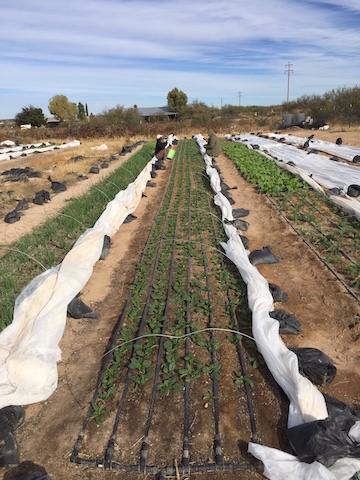
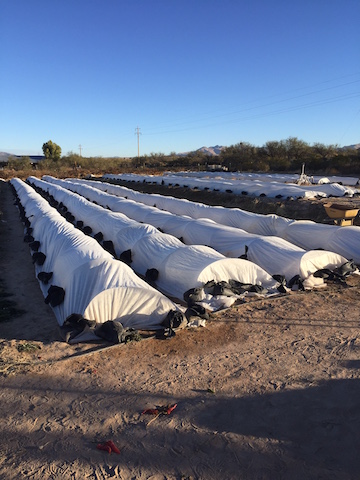
The winter crops are under double row covers now. This makes more work for us as we uncover all the beds in the morning after it warms up to allow the sun to shine on the plants, then cover everything back up in the mid-afternoon. This traps in some heat for the night and also protects the plants from the freezing temperatures.
I hope you had a great Thanksgiving and that the rest of your holiday weekend is relaxing.
We will NOT be at the Rillito market this Sunday (November 27) and there will be no CSA share distribution at that market.
We WILL be at the Green Valley market next Wednesday (November 30) and there will be a CSA share distribution in Green Valley. I have not determined the share content yet, so it will be a surprise.
Well we got the expected freeze, multiple freezes actually. Monday, Tuesday and Friday all had low temperatures around 32° F. At ground level it was likely a bit colder.
The tomato, eggplant, pepper and watermelon plants were all hit pretty hard. We have been salvage harvesting when we have had time all this week, including today. As such we have lots of green tomatoes and many pounds of green corno di toro sweet peppers (which taste just like green bell peppers).
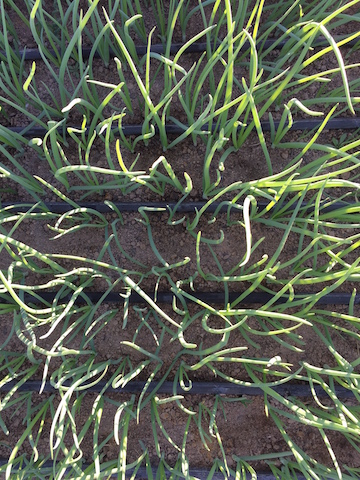
Your share this week will include some of the green corno di toro peppers, tomatoes (ripe ones, not green), sweet potatoes, Iitoi’s onions and some baby spinach from the bed we thinned this morning. So this share is yet another that spans the summer and fall/winter season crops. The freeze has quickened the transition to winter crops.
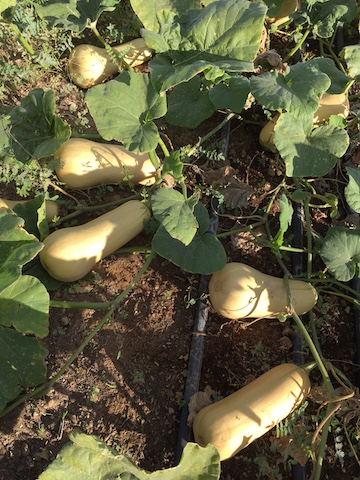
We harvested all the butternut squash Monday morning after the first freeze. They probably won’t be at the markets again for a month or so, as they need awhile to cure and sweeten up.
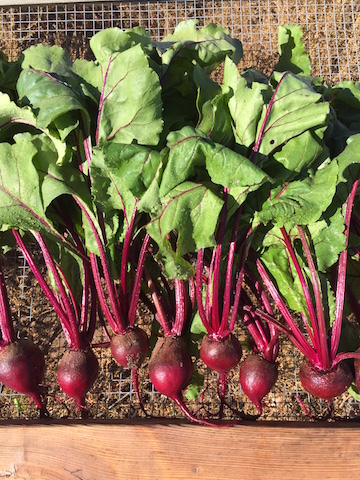
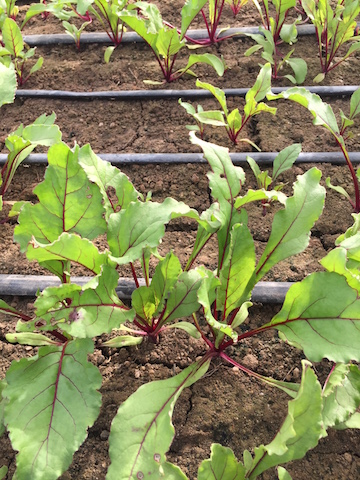
We harvested the first beets today – several pounds of red ones were ready and there are more on the way.
I have been checking the carrots every harvest day for a few weeks now and they are almost big enough to harvest – maybe two more weeks.
As a reminder we WILL be at the Green Valley market the day before Thanksgiving, but we will NOT be at the Rillito market the Sunday after Thanksgiving.
This season you will see some new and interesting crops/varieties that we are excited to grow for you. Parsnips and rutabagas are two new root crops that will be ready in a few months. We will also have broccoli raab and Romanesco cauliflower this season.
At the markets this week we will have a mix of summer and fall/winter vegetables. The transition from summer to fall/winter crops will depend on when the first freeze hits. The average first freeze in this part of the San Pedro Valley is Halloween, so it could come at any time now. The last two years it occurred on November 2. We have had a warm fall, so it might be a week or two before the cold takes our our remaining summer crops. The cool weather is already shutting down some of them – the chiles and peppers are nearly done; the okra plants will come out of the bed today; the tomatoes are really slowing down; the cucumbers are done for the season.
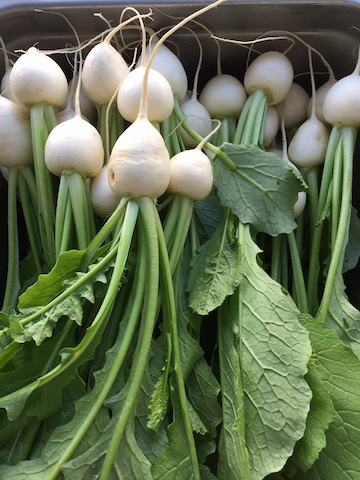
The Hakurei turnips and the radishes were the first of our cool-season vegetables to be harvested. Soon to follow are the carrots and beets. We will harvest the butternut squash sometime within the next few weeks.
Thank you for supporting local, organic, sustainable agriculture.
We are finally feeling some cool fall temperatures in the early morning. The afternoons the last few days have yielded some very pleasant working conditions.
Our fall crops are growing nicely in these conditions. As you can see in the image, the Hakurei turnips are ready for harvesting. We will have them in the markets for months now.
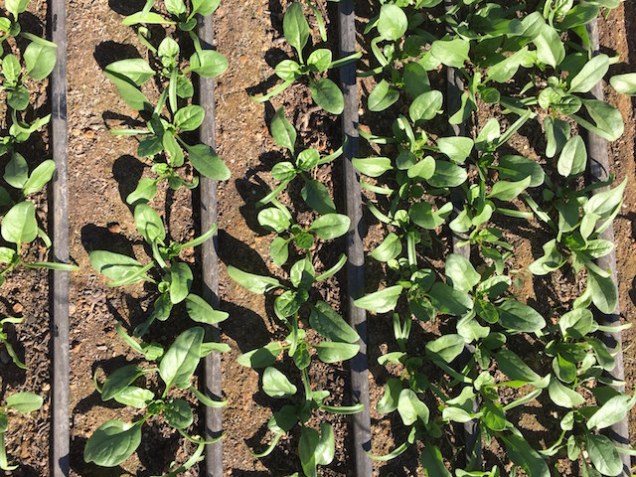
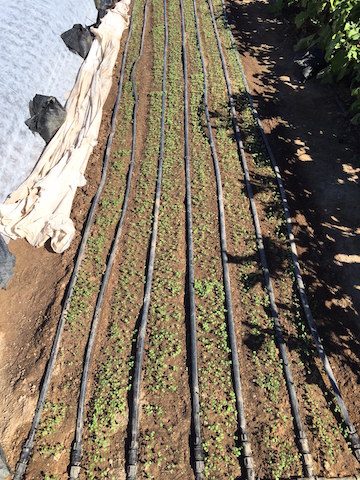
The spinach seedlings are up; our hardworking interns thinned them yesterday afternoon. The parsnips and rutabaga plants have sprouted; we completed the thinning and infill planting yesterday as well. The carrots have some very small, pale and thin roots starting to develop. The largest beet tops are about 8in tall and some of the beetroots are at the baby size.
Seasonality is also taking away some of the tastes we have been enjoying as the summer crops slowly fade. There will be no more of the Suyo Long Cucumbers that we have been eating for months. We’ll see them again next summer. The chiles are finally slowing down, too.
We will have the Tohono O’Odham yellow watermelons for awhile, though. When the frosts come, we will do a salvage harvest and keep the ripe ones until they sell out. The okra plants are still cranking, as are the sweet peppers, tomatoes, eggplant and mousemelons.
I hope the frost holds off a little while longer, although I won’t be sad to see the end of the grasshoppers, harlequin bugs and cucumber beetles after the first few hard freezes. The last two years the first hard freeze happened on November 2 and then it was warm for a few more weeks.
We have room for a few more CSA shareholders. If you would like to sign up for the next season, we will continue taking payments/reservations for our 16-week fall/winter CSA share program, deliveries for which will begin the middle of November and run through the middle of March 2017. Shares will cost $250 for 16 weekly deliveries.
We will have the forms at the markets this weekend, and they are also available on our website, here.
This week we finally removed the shade cloth and the bird netting from the blackberry bed. We will be doing a final weeding and mulching of the bed in preparation for the winter. Our blackberry harvest last summer was a bit disappointing, mostly due to the unseasonable and extremely hot 3 days right at the peak of the bloom. Next year we will use a heavier shadecloth maybe 40% or 50% and will also install an overhead watering line to help lower the temperature and increase the humidity around the blackberry bushes. That should help to substantially increase the yield.
We are also preparing two beds for planting garlic. Our plan is to triple the amount of garlic we plant because it was so popular last summer with our CSA shareholders and in the markets. We will likely plant the cloves next week. This is about as late as we can plant it, but the unseasonably warm temperatures in the long-term forecast should allow the plants to be established before it gets too cold.
If you signed up for a fall/winter CSA share, you will receive an email this weekend with the revised starting dates (starting 13Nov at Rillito and 16Nov at Green Valley) and other pertinent information.
We are still signing up CSA shareholders. If you would like to sign up for the next season, we will continue taking payments/reservations for our 16-week fall/winter CSA share program, deliveries for which will begin the middle of November and run through the middle of March 2017. Shares will cost $250 for 16 weekly deliveries.
We will have the forms at the markets this weekend, and they are also available on our website, here.
the beets are growing quickly!butternut ready to pick
It has been so warm lately, but we’re not complaining. The lingering end of the warm temperatures is allowing our summer crops to keep producing.
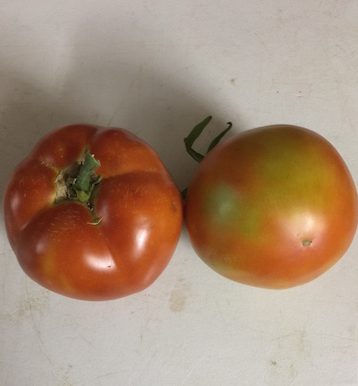
We gambled with some late season slicer tomatoes and it looks like the fates will allow us to harvest some tasty large tomatoes. The vines are loaded with green ones that are just starting to turn, so we’ll happily take the hot weather as long as it lasts.
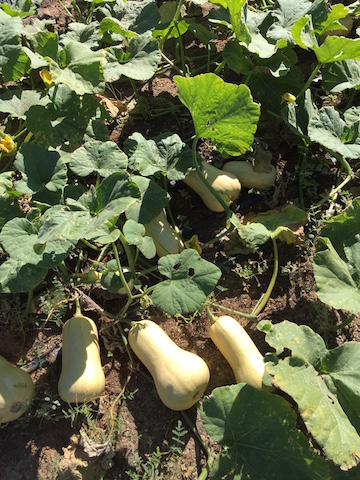
The warm temperatures are also hastening the ripening of the butternut squash. We have three beds that were planted a week or two apart. The butternuts from the earliest planting are almost ready to pick; the skin is turning from green to tan and is hardening. In the latest bed, the squash are still medium-sized and green. If we don’t get a frost for another month, we will have a much larger harvest of the butternut.
The sweet potatoes that we harvested last week are curing in the pumphouse in high humidity and relatively high temperatures. We had a heater going in the pumphouse most of last night and will run the heater all night tonight. We have some very tasty sweet potatoes on the way!
We are still signing up CSA shareholders. If you would like to sign up for the next season, we will continue taking payments/reservations for our 16-week fall/winter CSA share program, deliveries for which will begin the middle of November and run through the middle of March 2017. Shares will cost $250 for 16 weekly deliveries.
We will have the forms at the markets this weekend, and they are also available on our website, here.
the butternut squash are almost ready to pick !our late-season slicing tomatoes are also almost ready to pick
We had a 42°F low temperature this morning and a high of 85° yesterday – a 45 degree diurnal temperature difference. It is definitely fall in southeast Arizona.
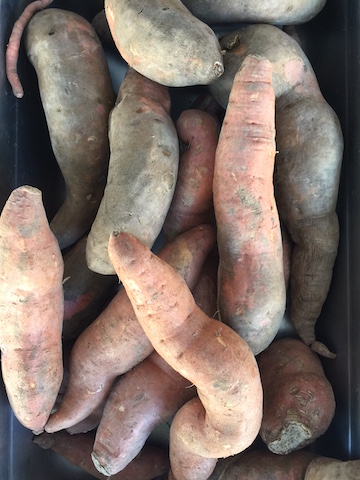
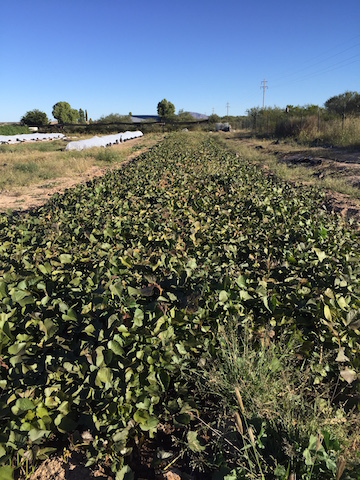
Today we are harvesting the sweet potatoes. They have been growing since May. The process involves first soaking the bed to soften up the soil (which we did yesterday), then clipping off all the vines at ground level (after this week, no more sweet potato greens until next summer), then digging up the sweet potatoes. The potatoes have to be dug carefully because they are brittle. The skins are also fragile, so they have to be handled pretty gently to avoid damage. We will then brush off the soil and put them in crates for curing.
The curing process optimally occurs at 85 to 90°F and at 90% relative humidity for 5 to 10 days. This heals the cuts and abrasions plus it initiates the creation of the enzymes that sweeten the potatoes. After the initial warm period of the curing process, the potatoes are then stored at about 60° for another six weeks or so which further develops the sugars.
We will have the uncured potatoes for sale in the market. These taste fine and can be used for cooking, but for the sweetest potatoes we will have to wait another couple of months.
We are still signing up CSA shareholders. If you would like to sign up for the next season, we will continue taking payments/reservations for our 16-week fall/winter CSA share program, deliveries for which will begin the middle of November and run through the middle of March 2017. Shares will cost $250 for 16 weekly deliveries.
We will have the forms at the markets this weekend, and they are also available on our website, here.
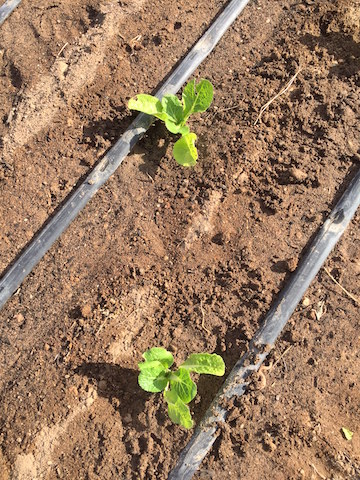
We are transitioning to our fall crops, planting apace all kinds of roots (turnips, radishes, beets, rutabagas, parsnips, carrots), cole crops(broccoli, cauliflower) and, of course, greens such as arugula, mizuna, tatsoi, various mustards, spinach, lettuces, kales and collard greens. None of these are ready yet; the first will be some of the greens, then the radishes and turnips. The last fall planting to be ready will be the parsnips in late January.
We will also soon be harvesting two popular fall vegetables that are planted in the summer: sweet potatoes and butternut squash. We will dig a few tens of pounds of sweet potatoes today and take them to the markets this weekend. They will be uncured, but still very good. The bulk of the sweet potato harvest will be cured in the coming weeks and then stored for our CSA and for the fall/winter markets.
We are still signing up CSA shareholders. If you would like to sign up for the next season, we will continue taking payments/reservations for our 16-week fall/winter CSA share program, deliveries for which will begin the middle of November and run through the middle of March 2017. Shares will cost $250 for 16 weekly deliveries.
We will have the forms at the markets this weekend and they are also available on our website, here.
Thank you for supporting organic, sustainable agriculture in southern Arizona.
The end of the monsoon delivered nearly an inch of rain at the farm – 0.85″ in the last week. The total rainfall at the farm since late June is 8.01″ – a pretty good rainy season this year.
Lately we have planted two types of beets, onions, carrots, lettuce mix, salad mix and radishes. Today and tomorrow we will get in the parsnips, rutabagas, kales and various greens.
We have started removing the shadecloth from the growing beds in preparation for the fall and winter growing season.
If you have signed up for the fall/winter CSA season, your email address will be added to the next CSA newsletter email distribution list and you will start receiving emails in a few weeks.
As mentioned in earlier newsletters, if you would like to sign up for our next CSA season, we will continue taking payments/reservations for our 16-week fall/winter CSA share program, deliveries for which will begin the middle of November and run through the middle of March 2017. Shares will cost $250 for 16 weekly deliveries. We will have the forms at the markets this weekend and they are also available on our website, here.
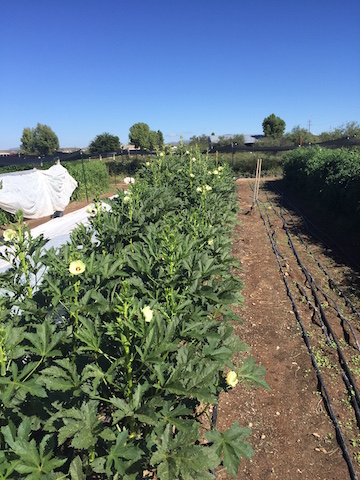
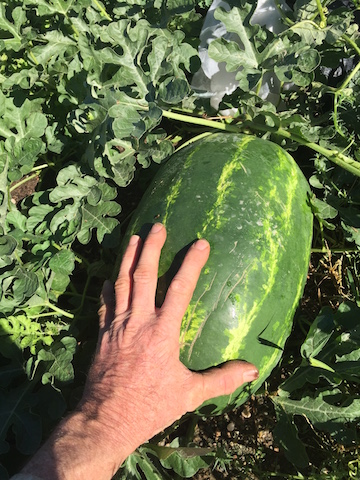
okra plants full of bloomswatermelons are almost ready

 SouthWinds Farm